 LittleStory
A Saturday spent filling in a store listing: 80 characters, 4000 more, an icon at a size nobody sees, and a data safety form that made me count what we actually keep.
app storeshippinggoogle playindie devstore listingEighty characters and a deadline
I spent a Saturday morning writing 80 characters. Not code. A description.
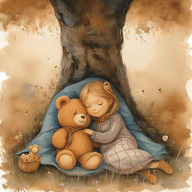
LittleStory is the app my daughter and I have been using since spring: she picks a photo, records a few seconds of her own voice, says one sentence, and gets back an illustrated bedtime story that reads itself in the voice she just recorded. It has worked for months. It worked the night before. And Google Play would not let me ship it until I described it in 80 characters.
The 4000-character page
The long description allows 4000 characters, which sounds generous until you notice that almost nobody reads it. Except two people do: the person deciding whether to tap Install, and the reviewer deciding whether your app is allowed to exist. I wrote a feature list first, and it read like a spec sheet. So I rewrote it as the thing itself: a photo at the top, four sentences under it, a small voice at the bottom.
Somewhere in there is the answer to a question nobody asks out loud: what is this for? I wrote that it is for the twenty minutes between bath and sleep, when you have run out of stories and she has not run out of wanting them.
The data safety form counts for you
Then came the data safety declaration, which asks what you collect and why. I had been telling myself we collect almost nothing. The form made me list it properly: a photo, a voice recording, one sentence of text — and if the story is generated on a server, all three leave the device. That is not a scandal. It is simply something you should be able to say out loud, in a form, before a stranger asks.
There is also a 512x512 icon and a 1024x500 feature graphic. You draw them at a size no human ever sees; the icon then lands in a list at 48 pixels, next to a hundred others.
The screenshot problem
At least two screenshots are required. Here is the trouble: the thing that makes LittleStory good cannot be photographed. It is the sound of my own voice coming out of the phone, slightly wrong, and my daughter not caring. A screenshot is silent.
So I shot the build screen instead — the photo at the top, the story growing underneath — and let the form believe that was the product.
Content rating. Target audience. Is this app for children? It is and it is not; she taps the buttons, but I hold the phone. Every one of those answers is a commitment, and none of them can be argued with later.
None of it was about whether it worked
The app never broke during any of this. Not one of those fields had anything to do with whether it worked — and every one of them was a place where it could have stopped.
Shipping is not the last step of building. It is a second, quieter product, written in forms, and it has its own bugs.